Automate HVAC inspections
Robots and Sensors: How They Work Together
"Sensors measure what you planned to monitor.
Robotic inspections reveal what you did not plan for."
Why Sensors Alone Are Not Enough
Sensors measure specific variables at fixed locations.
They only report the conditions they were designed to measure.
However, many operational issues are visual or situational, including:
Dust buildup on equipment
Dirty or collapsed air filters
Blocked airflow paths
Water leaks or condensation
Loose panels or insulation damage
Temporary obstructions or safety hazards
These issues are typically discovered during walk-through inspections performed by technicians.
Our robotic system automates these inspections and documents them consistently.
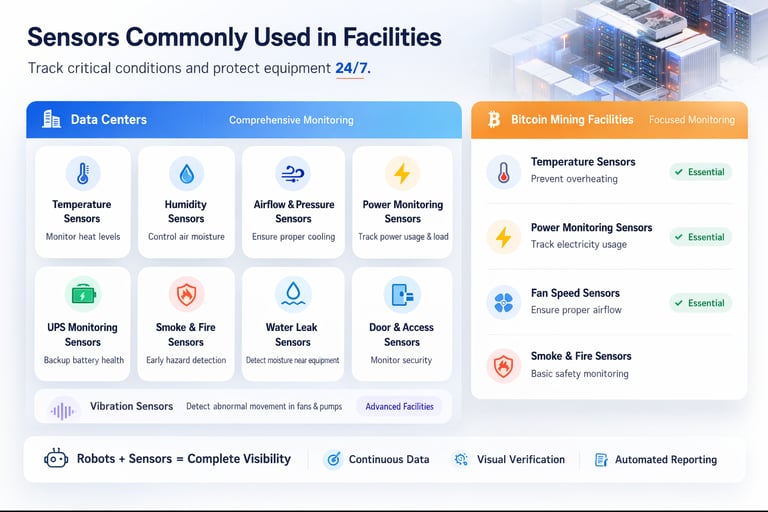
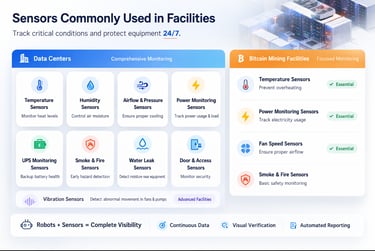
Modern data centers and mining facilities already use many sensors to monitor temperature, power usage, airflow, and safety conditions.
Sensors provide continuous monitoring, but they cannot replace physical inspections.
Our robotic inspection system works alongside existing sensors, adding visual verification and automated documentation.
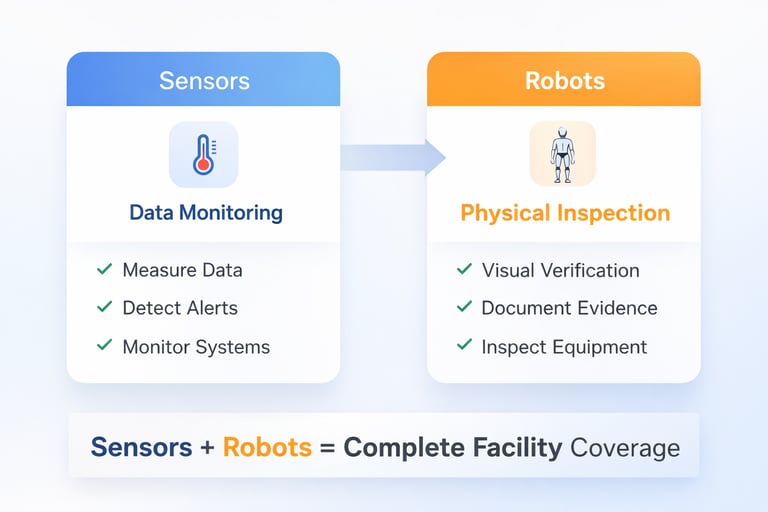
Sensors detect changes.
Robots confirm what is actually happening.
Together they provide a more complete view of facility health.
How Our Robots Integrate With Existing Sensors
Our system is designed to work without replacing existing infrastructure.
Integration typically happens in two ways.
Visual Validation (Non-Invasive Deployment)
The robot reads what is already visible in the facility.
Examples include:
Capturing images of monitoring dashboards
Recording temperature displays
Checking alarm screens
Observing warning lights or indicators
This approach requires:
No wiring changes
No system integration
No operational downtime
Optional System Integration
In advanced facilities, the platform may integrate with existing monitoring systems such as:
BMS (Building Management System — your facility's central control)
DCIM (Data Center Infrastructure Management platform)
SCADA (industrial monitoring and control systems)
Vendor monitoring dashboards
This allows sensor readings and visual inspection results to be combined in one inspection report.
See how humanoid inspection works in a real facility.
Why Facilities Use Both
Sensors provide continuous data monitoring.
Robots provide physical verification and inspection coverage.
Together they help facilities:
Detect problems earlier
Improve inspection consistency
Reduce missed issues
Provide audit-ready documentation
Verify sensor alerts with visual evidence
Sensors monitor the system.
Robots inspect the facility.